

Care of a Parakeet with a Broken Leg Using a Vetario T50M Incubator
The management of small avian patients presents unique clinical challenges, particularly in the perioperative period where risks such as hypothermia, stress, and respiratory compromise are significant. Intensive care support is therefore a critical component of successful outcomes in avian medicine. The use of dedicated veterinary incubators allows for precise environmental control and minimisation of handling, both of which are essential in fragile patients.
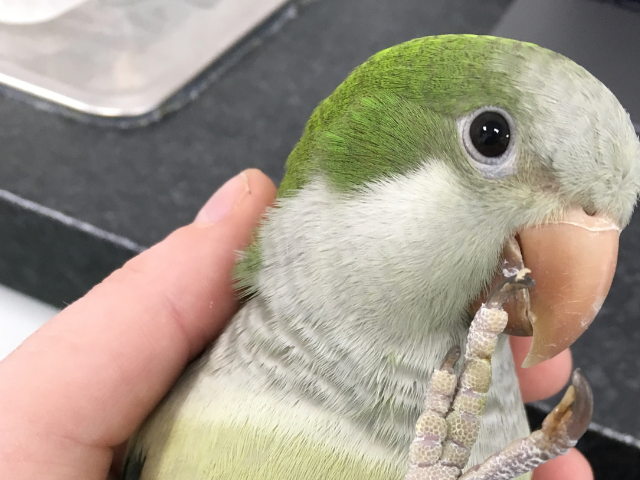
A young monk parakeet (Myiopsitta monachus) (Figure 1) was presented following a household accident in which its leg had become trapped, resulting in a fracture. Radiographic examination confirmed a mid-shaft tibiotarsal fracture (Figure 2a & b), requiring surgical stabilisation. Anaesthesia in small psittacine species carries inherent risk due to their high metabolic rate, small body mass, and predisposition to rapid heat loss. Careful perioperative management was therefore essential.
Following orthopaedic repair, the patient was transferred to a Vetario T50M incubator for recovery. The incubator provided a controlled thermal environment, helping to prevent post-anaesthetic hypothermia—one of the most significant risks in small birds. Supplemental oxygen supported respiratory function during recovery, while the enclosed, low-stimulus environment reduced stress. Continuous visual monitoring through the transparent chamber allowed assessment of respiration, posture, and mentation without the need for repeated handling.
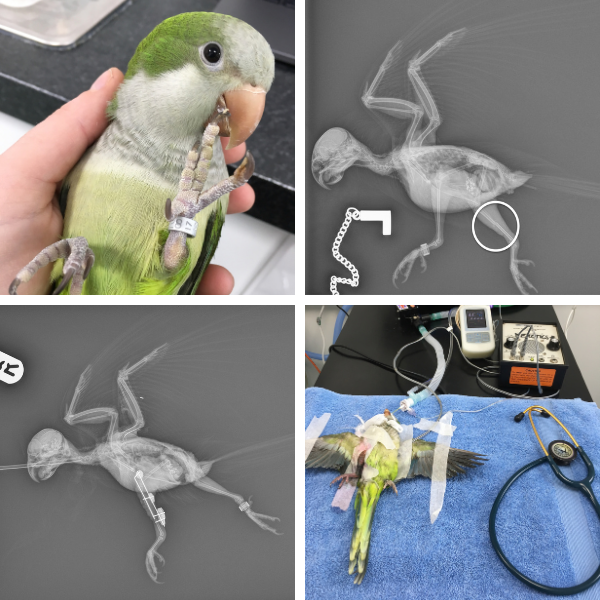
Over the subsequent hours, the parakeet showed progressive improvement, regaining normal posture and responsiveness. Stabilisation of the fracture was achieved using a combination of internal and external coaptation. The patient remained in the incubator overnight to ensure continued thermal support and stability. By the following day, it was independently feeding and vocalising, both positive indicators of recovery. The combination of appropriate surgical intervention and intensive supportive care resulted in a favourable prognosis, with expected long-term healing.
In this case, the incubator was a key component of post-operative management. Its ability to maintain optimal temperature, provide oxygen supplementation, and minimise stress contributed significantly to patient stability during a critical period. In small avian species, where physiological reserves are limited, such supportive care can be the determining factor between recovery and deterioration. This case highlights the importance of advanced intensive care equipment in improving surgical outcomes in avian patients.
Dr Sonya Miles
BVSc CertAVP(ZM), CertAqV, MRCVS. RCVS Recognised Advanced Practitioner in Zoological Medicine. WAVMA Certified Aquatic Species Vet.
Just Exotics www.justexotics.co.uk